Donkey Kong

Welcome to the We Love the Eighties Community

This community is dedicated to the music, movies, television, games, radio, and pop culture that defined the 1980s. It is a place for people who lived the decade, as well as those who appreciate what made it unforgettable. Members use this forum to check in during live radio blocks, share weekly listening memories, and talk about what the music, shows, and moments of the 80s bring back for them. Guests are welcome to browse selected discussions, while full participation requires registration. If you would like to understand the intent behind this community and how it is curated, you can read more here: About This Community. Explore current conversations, share your memories, and take part in a community built around real 80s experiences.

Join the discussion

See what members are talking about right now
Free registration. Facebook and Google login available.

  • 0
  • 0
  • 0
Donkey Kong
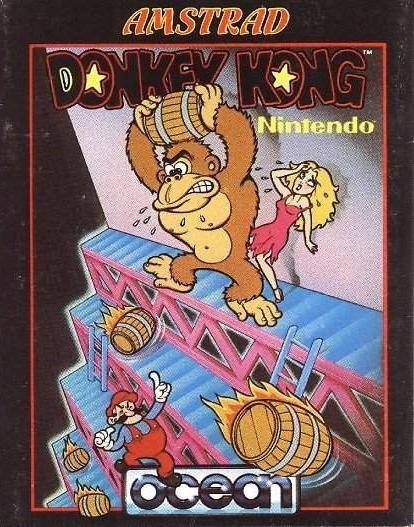
Donkey Kong (Japanese: ドンキーコング Hepburn: Donkī Kongu?) is an arcade game released by Nintendo in 1981. It is an early example of the platform game genre, as the gameplay focuses on maneuvering the main character across a series of platforms while dodging and jumping over obstacles. In the game, Mario (originally named Mr. Video but then changed to "Jumpman") must rescue a damsel in distress named Pauline (originally named Lady), from a giant ape named Donkey Kong. The hero and ape later became two of Nintendo's most popular and recognizable characters. Donkey Kong is one of the most important titles from the Golden Age of Video Arcade Games, and is one of the most popular arcade games of all time. The game was the latest in a series of efforts by Nintendo to break into the North American market. Hiroshi Yamauchi, Nintendo's president at the time, assigned the project to a first-time video game designer named Shigeru Miyamoto. Drawing from a wide range of inspirations, including Popeye, Beauty and the Beast and King Kong, Miyamoto developed the scenario and designed the game alongside Nintendo's chief engineer, Gunpei Yokoi. The two men broke new ground by using graphics as a means of characterization, including cutscenes to advance the game's plot, and integrating multiple stages into the gameplay. Regardless of initial doubts by Nintendo's American staff, Donkey Kong succeeded commercially and critically in North America and Japan. Nintendo licensed the game to Coleco, who developed home console versions for numerous platforms. Other companies cloned Nintendo's hit and avoided royalties altogether. Miyamoto's characters appeared on cereal boxes, television cartoons, and dozens of other places. A lawsuit brought on by Universal City Studios, alleging Donkey Kong violated their trademark of King Kong, ultimately failed. The success of Donkey Kong and Nintendo's victory in the courtroom helped to position the company for video game market dominance from its release in 1981 until the late 1990s (1996–1999).

Released:
Publisher: N/A
Players: 1
Co-op: No
Platform
Trailer

Pete

Mr. Eighties
Joined
Apr 29, 2023
Messages
13,764
Reaction score
549
Donkey Kong (Japanese: ドンキーコング Hepburn: Donkī Kongu?) is an arcade game released by Nintendo in 1981. It is an early example of the platform game genre, as the gameplay focuses on maneuvering the main character across a series of platforms while dodging and jumping over obstacles. In the game, Mario (originally named Mr. Video but then changed to "Jumpman") must rescue a damsel in distress named Pauline (originally named Lady), from a giant ape named Donkey Kong. The hero and ape later became two of Nintendo's most popular and recognizable characters. Donkey Kong is one of the most important titles from the Golden Age of Video Arcade Games, and is one of the most popular arcade games of all time. The game was the latest in a series of efforts by Nintendo to break into the North American market. Hiroshi Yamauchi, Nintendo's president at the time, assigned the project to a first-time video game designer named Shigeru Miyamoto. Drawing from a wide range of inspirations, including Popeye, Beauty and the Beast and King Kong, Miyamoto developed the scenario and designed the game alongside Nintendo's chief engineer, Gunpei Yokoi. The two men broke new ground by using graphics as a means of characterization, including cutscenes to advance the game's plot, and integrating multiple stages into the gameplay. Regardless of initial doubts by Nintendo's American staff, Donkey Kong succeeded commercially and critically in North America and Japan. Nintendo licensed the game to Coleco, who developed home console versions for numerous platforms. Other companies cloned Nintendo's hit and avoided royalties altogether. Miyamoto's characters appeared on cereal boxes, television cartoons, and dozens of other places. A lawsuit brought on by Universal City Studios, alleging Donkey Kong violated their trademark of King Kong, ultimately failed. The success of Donkey Kong and Nintendo's victory in the courtroom helped to position the company for video game market dominance from its release in 1981 until the late 1990s (1996–1999).
 
Back
Top