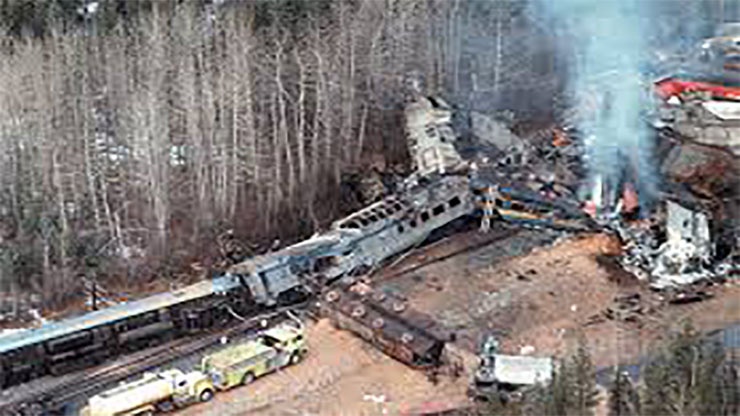
On this day, February 8, 1986, the Hinton Train Collision occurred near Hinton, Alberta, marking one of the deadliest rail disasters in Canadian history. A Via Rail passenger train collided head on with a Canadian National (CN) freight train, resulting in a devastating crash that claimed 23 lives and injured more than 70 others.
The collision happened when the CN freight train failed to stop at a red signal, leading to a catastrophic impact with the passenger train, which was carrying over 100 people at the time. The force of the crash derailed multiple cars and caused a massive fire, making rescue efforts difficult.
Investigations later revealed that crew fatigue and miscommunication were major factors in the disaster. The freight train crew was found to have ignored several signals instructing them to stop, leading to widespread discussions on rail safety regulations in Canada. As a result, stricter safety measures and crew work hour regulations were implemented to prevent similar tragedies in the future.
The Hinton Train Collision was the worst Canadian rail disaster since 1956 and led to significant changes in railway operating rules, including stricter monitoring of train crews.
80s insight: The 1980s brought renewed focus on transportation safety following major public tragedies.
The collision happened when the CN freight train failed to stop at a red signal, leading to a catastrophic impact with the passenger train, which was carrying over 100 people at the time. The force of the crash derailed multiple cars and caused a massive fire, making rescue efforts difficult.
Investigations later revealed that crew fatigue and miscommunication were major factors in the disaster. The freight train crew was found to have ignored several signals instructing them to stop, leading to widespread discussions on rail safety regulations in Canada. As a result, stricter safety measures and crew work hour regulations were implemented to prevent similar tragedies in the future.
The Hinton Train Collision was the worst Canadian rail disaster since 1956 and led to significant changes in railway operating rules, including stricter monitoring of train crews.
80s insight: The 1980s brought renewed focus on transportation safety following major public tragedies.