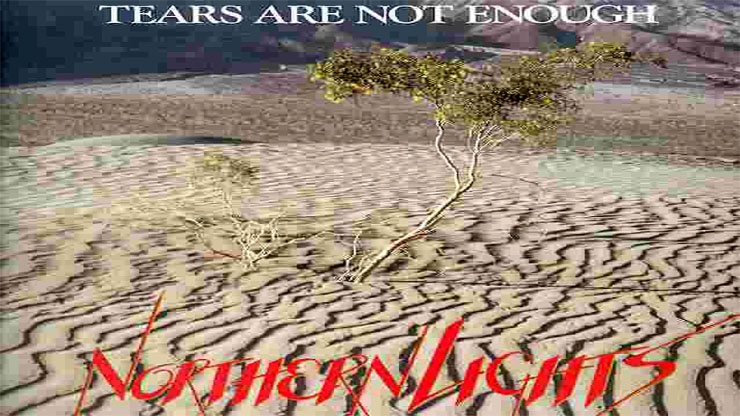
On this day, February 10, 1985, some of Canada’s most famous musicians came together to record Tears Are Not Enough, a charity single to raise funds for Ethiopian famine relief. The song was Canada’s response to Band Aid’s Do They Know It’s Christmas? and USA for Africa’s We Are the World, proving that the global music community was uniting to support those in need.
The single was recorded by a supergroup of Canadian artists under the name Northern Lights, featuring stars such as Bryan Adams, Joni Mitchell, Neil Young, Gordon Lightfoot, Anne Murray, Geddy Lee, and Corey Hart. Written by Bryan Adams, Jim Vallance, and David Foster, Tears Are Not Enough became a major success, raising millions for famine relief efforts in Africa.
Released in March 1985, the song peaked at number one in Canada and was later included on the We Are the World album, ensuring it reached an even wider audience. It remains a powerful example of musicians using their talents for humanitarian efforts.
80s insight: The mid 1980s saw musicians unite to address global issues through collaborative recordings.
The single was recorded by a supergroup of Canadian artists under the name Northern Lights, featuring stars such as Bryan Adams, Joni Mitchell, Neil Young, Gordon Lightfoot, Anne Murray, Geddy Lee, and Corey Hart. Written by Bryan Adams, Jim Vallance, and David Foster, Tears Are Not Enough became a major success, raising millions for famine relief efforts in Africa.
Released in March 1985, the song peaked at number one in Canada and was later included on the We Are the World album, ensuring it reached an even wider audience. It remains a powerful example of musicians using their talents for humanitarian efforts.
80s insight: The mid 1980s saw musicians unite to address global issues through collaborative recordings.